
'In the last one year, we have added more than Rs 1.7 trillion, and we are on track.'

SBI Q3FY24 result review: A higher-than-factored weakness in the October-to-December quarter (Q3) results of State Bank of India (SBI), for financial year 2023-24 (FY24), has prompted brokerages to cut earnings estimates for the ongoing financial year. They, however, have maintained 'Buy' ratings on the stock, revising target price upwards in some cases, owing to the stock's recent underperformance relative to its peers.

Credit-to-deposit (CD) ratio of major public sector and private sector banks during the October-December quarter of FY24 inched up as compared to the previous quarter though government-owned lenders reported a lower rate than their private peers. CD ratio is the ratio of the funds that banks lend as compared to the funds raised in the form of deposits. The CD ratio of top public sector banks (PSBs) - State Bank of India, Punjab National Bank, Bank of Baroda and Canara Bank - was lower than their private counterparts.

Shares of state-owned bank stocks were under pressure on Monday due to muted deposit and credit growth numbers reported by these lenders in the October-December quarter (Q3) of 2024-25 (FY25). The Nifty PSU Bank index was down 4 per cent, with Union Bank of India emerging as the biggest loser as its shares fell 7.5 per cent to close at Rs 114.7, followed by a 5.7 per cent drop in shares of Bank of Baroda (BoB) to Rs 228 and a 4.7 per cent slide in shares of Bank of India to Rs 99.8 on the National Stock Exchange.

Godrej Consumer Products (GCPL) had a disappointing third quarter (Q3FY25) with flat volumes (after 7 per cent growth H1FY25). Price hikes will be required to maintain margins to offset the cost of palm oil inflation. However, some analysts see Q3 as an exception with strong volume growth expected to resume and it may be the fastest growing FMCG player in FY26.

Propelled by strong demand and lower costs, the country's largest airline, InterGlobe Aviation (IndiGo), reported solid operational performance in the 2024-25 (FY25) October-December quarter (Q3). While demand was driven by the festival season, year-end increase, and higher consumer spending, lower fuel and rental costs helped deliver a beat at the operating profit level.

The stocks are largely from sectors such as chemicals, finance and cement, which struggled earlier but the worse seems to be behind them.

Ola Electric could gain market share in the near term with relatively less disruption expected due to rare earth magnets shortage, according to a report by Goldman Sachs. The company has successfully developed heavy rare earths (HRE) free motors which are scheduled for production deployment in Q3 FY26.

The slowdown in private consumption in the economy is taking a toll on the growth of fast-moving consumer goods (FMCG). The net sales growth of listed FMCG companies hit a 14-quarter low of 2.5 per cent in October-December 2023 (Q3FY24). This is the lowest revenue growth for the industry since the June 2020 quarter, when the FMCG firms in the Business Standard sample had reported a 13.2 per cent Y-o-Y decline in combined net sales owing to the lockdown.

A pickup in freight rates, rising fleet utilisation and a long-awaited replacement cycle are breathing fresh life into India's commercial vehicle (CV) market, strengthening the investment case for Tata Motors' CV arm (TMCV). Despite a broadly steady December quarter (Q3) performance, brokerages remain divided on whether the upswing is strong enough to offset margin pressures.

Tech Mahindra, HCL Tech, State Bank of India, UltraTech Cement and HDFC Bank were also among the gainers. In contrast, Eternal, Asian Paints, Bharat Electronics, Sun Pharma and Maruti were among the laggards.

Indian Hotels reported strong consolidated revenue growth of 29 per cent year-on-year (Y-o-Y) in the third quarter of the current financial year (Q3FY25), led by revenue per available room, or RevPAR, growth of 15 per cent. The average room rate, or ARR, was up 13 per cent and occupancy improved 120 basis points (bps) Y-o-Y on a standalone business. Like-for-like revenue growth was 15 per cent Y-o-Y, while TajSats (airline catering) grew by 18 per cent Y-o-Y.

Growth accelerated for Zomato operator Eternal in the second quarter of financial year 2026 (Q2FY26). Zomato's business to commerce (B2C) operations delivered a strong 57 per cent year-on-year (Y-o-Y) rise in net order value (NOV) to Rs 23,164 crore while consolidated revenue soared 183 per cent Y-o-Y (90 per cent Q-o-Q) to Rs 13,590 crore during the period, with like-for-like (LFL) growth of 65 per cent, and acceleration in the quick commerce (QC) segment, which recorded NOV growth of 137 per cent Y-o-Y (27 per cent Q-o-Q).

Public sector banks' (PSBs') employee count grew for the first time in five years while private sector banks' staff strength saw a decline in 2024-25 (FY25), according to latest data released by the Reserve Bank of India (RBI). The employee count of state-owned lenders rose 0.22 per cent year-on-year (Y-o-Y) to 757,641 at the end of March 31, 2025 from 756,015 in FY24.
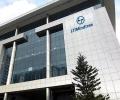
LTIMindtree's (LTIM's) December quarter revenue, at $1.139 billion, was up 1.8 per cent quarter-on-quarter (Q-o-Q) (5.6 per cent year-on-year or Y-o-Y) in constant currency (CC) terms, marginally ahead of expectations.

Defying the bearish sentiment in the markets on Monday, ICICI Bank's share price rose by 2 per cent, reaching an intraday high of Rs 1,234.4 per share on the BSE. With a 1.5 per cent gain at the close, the stock emerged as the top performer on both the BSE Sensex and the National Stock Exchange Nifty 50 indices.

Infrastructure bonds, which were relied upon the most in 2024-25 (FY25) by commercial banks to raise funds through the domestic debt capital market amid lagging deposit growth, seem to have lost their sheen in FY26. So far in FY26, no bank has tapped the domestic debt capital market to raise funds via infra bonds, and the expectation is that the amount raised through this route will be significantly lower than that last year, unless credit demand picks up.

Brokerages have maintained their ratings and target prices on FSN E-Commerce Ventures, the parent company of Nykaa, after the fashion and beauty online retailer posted in-line numbers during the October-December quarter (Q3) of financial year 2023-24 (FY24). They have, however, cut earnings before interest, tax, depreciation, and amortisation (Ebitda) estimates after weak demand weighed across line items in Q3. "While revenue growth was healthy at 22 per cent year-on-year (Y-o-Y), gross margins declined 90 basis points (bps), weighed by higher discounting in own brands and lower ad income.

A lower risk appetite among investors has driven gold, traditionally a safe-haven asset, to record highs so far this year. Fuelled by geopolitical tensions in West Asia, robust demand from central banks - particularly in Asia - and US President Donald Trump's tariff volleys, spot gold touched an all-time high of $2,956 per ounce on February 24 in the international markets.

* Repo rate reduced by 25bps to 5.25 pc; * 4th rate cut, totalling 125 bps, since February 2025; * MPC also decided to continue with neutral stance; * GDP growth forecast for FY26 raised to 7.3 pc from 6.8 pc;

The third quarter (Q3) of 2023-24 (FY24) has proven to be pivotal, witnessing some startups turning profitable and others enhancing their performance as their businesses finally begin to deliver. Startups like Delhivery, Zomato, PolicyBazaar, Mamaearth, and Nykaa have either become profitable or improved their profit margins in Q3FY24. A renewed focus on profitability, supported by operational efficiencies, expense rein-in, and robust demand during the festival season, has empowered companies to strengthen their performance.

Shares of Bajaj Finance surged over 6 per cent on Thursday after the diversified non-banking finance company reported an 18 per cent increase in consolidated net profit to Rs 4,308 crore for the December quarter. The stock rallied 6.33 per cent intraday to touch Rs 8,249.95 - a 52-week high -- on the BSE.

Eternal (formerly known as Zomato) reported a net profit of Rs 39 crore for the fourth quarter of FY25, down 77.7 per cent year-on-year from Rs 175 crore in the same period a year ago. On a sequential basis, profit was also down 33.8 per cent from Rs 59 crore in the preceding quarter (Q3FY25).

India's merchandise trade deficit widened to a record $41.68 billion in October, as gold imports trebled and outbound shipments registered their sharpest contraction in 14 months, according to data released by the commerce department.

Utilities in the power sector present an interesting investment case at this moment. Most power stocks have lost substantial ground in the past 12 months.

Public-sector banks (PSBs) are attracting the attention of investors and the PSU Bank Index has gained nearly 10 per cent in the past month. PSBs have seen return on assets (RoA) climbing to 1 per cent in 2024-2025 (FY25) and margins are believed to have moved up further in the first half of this financial year (H1FY26) with asset quality remaining stable.

The stock of mall developer and commercial real estate major, The Phoenix Mills (Phoenix), is up 26 per cent since its business update in the third week of January. The gains came on strong December quarter performance and the consumption boost in the Budget which is expected to help the company sustain its growth trends.

India's economic growth rate decelerated to 6.2 per cent in the October-December quarter this fiscal, mainly due to poor performance by mining, manufacturing and all other sectors, with the exception of agriculture. However, on a sequential basis, the economic growth rate in the third quarter showed improvement over 5.6 per cent recorded in the second quarter.

Bharti Airtel is expected to see its highest revenue growth, and subscriber addition during the third quarter (October-December) of FY25 among telcos, said analysts. The telco's top line in Q3 may see the fastest sequential growth at 5 per cent compared to 3 per cent for Reliance Jio and Vodafone Idea (Vi). Airtel's annual mobile revenue growth would rise to 16 per cent, IIFL Capital said in an analyst note.

Indian equities declined on Friday, with the benchmark Nifty posting its worst weekly fall since September, as foreign investor sentiment remained weak amid tepid earnings growth and little progress on the India-US trade front.

The Reserve Bank on Wednesday revised upward its growth estimates for the current fiscal year to 6.8 per cent and lowered its inflation projection to 2.6 per cent based on an above-normal monsoon and the rationalisation of GST rates.

The stock of automotive (auto) components major Bharat Forge has risen 14.6 per cent over the past month. Despite ongoing demand challenges, strong operating performance in the July-September quarter (Q3) of 2025-26 (FY26), a diversified revenue base, and expectations of a gradual recovery have lifted sentiment.

Shares of Bajaj Finance sprinted 4.7 per cent to Rs 7,732 per share on the BSE in Thursday's (January 4) intra-day trade as the non-bank finance company's (NBFC's) December quarter business update reflected minimal impact of the Reserve Bank of India's ban on two of its lending products. The shares, eventually, ended 4.4 per cent higher at Rs 7,710 per share as against 0.69 per cent gain in the benchmark S&P BSE Sensex. The NBFC's asset under management (AUM) topped the Rs 3-trillion-mark at the end of December 2023, swelling by roughly Rs 20,700 crore (35 per cent year-on-year) to hit Rs 3.11 trillion-mark.

Shares of Tata Consultancy Services (TCS), the country's largest IT services provider, continue to remain under pressure, hitting a new eight-month low of Rs 3,624.90 intraday on Tuesday before closing at Rs 3,631, down 1.19 per cent. In the past two trading sessions, the stock price has declined 4 per cent on fears of a slowing US economy.
Post-election capital expenditure (capex) has been weak at 2 per cent year-on-year (Y-o-Y) in M9FY25. The FY25 revised estimates (RE) indicate 7 per cent growth in FY25 against FY24, implying 21 per cent Y-o-Y growth in Q4FY25 government capex.

Leading chains plan Rs 40K crore infra revival to close capacity gap over next 3-5 years

India Inc's quarterly net profit reached a record high of Rs 1.64 trillion in the third quarter ended December 31, 2020, mainly due to gains from higher commodity prices and a big swing in banks' earnings. The combined net profit of 3,323 listed companies that have declared results so far was up 68.6 per cent year-on-year (YoY). In comparison, earnings were up six times (534 per cent) in the second quarter and 6.5 per cent in the corresponding period last year.

There have been multiple instances of the same entity appearing as both a public shareholder as well as under the promoter classification in some listed companies. And this dual-classification happened in the same quarter, according to data compiled by primedatabase.com.

Developers are entering one of the busiest construction cycles, with the top four firms planning launches worth Rs 1.13 trillion over the near to medium term, even as execution faces pressure from approval delays, labour shortages, rising costs, and contractor capacity limits across the industry.

Earnings growth trajectory for India's capital goods firms is likely to stay buoyant for the December 2023-ended quarter (Q3 FY24), said analysts. Guidance on margins, ordering activity in an election year and export-related demand would be key monitorables. Brokerages - Motilal Oswal, Nuvama, Kotak Institutional Equities and Prabhudas Lilladher - estimated revenue growth for their capital goods universe to be 11-16 per cent year-on-year (Y-o-Y).
 © 2026 Rediff.com - Advertise with us - Disclaimer - Privacy Policy - Sitemap - Feedback - About us - Terms of use - Grievances